Physical Address
5206 Hwy 5 N Suite 100, Bryant, AR, United States, Arkansas
Physical Address
5206 Hwy 5 N Suite 100, Bryant, AR, United States, Arkansas
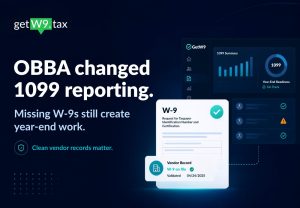
The One Big Beautiful Bill Act, commonly discussed as OBBBA, changed several tax provisions. For accounts payable teams, controllers, bookkeepers, and business owners, one of the most practical changes is around certain 1099 reporting thresholds.
That sounds like less paperwork.
But here is the part businesses should not miss: a higher reporting threshold does not magically clean your vendor records.
You still need to know who your vendors are, how much they were paid, whether they are reportable, and whether you have the correct legal name and taxpayer identification number on file. That is where W-9 collection still matters.
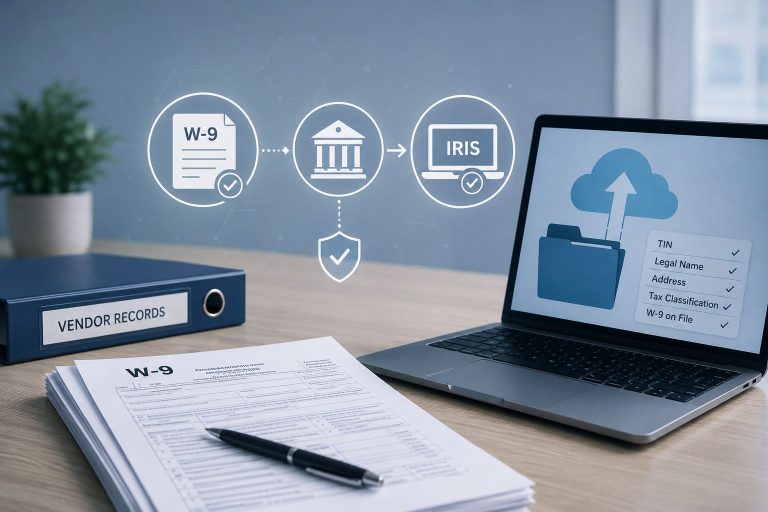
The IRS states that Form W-9 is used to provide a correct taxpayer identification number to a person required to file an information return with the IRS, including for income paid to the recipient. (IRS)
In plain English: if your business may need to issue a 1099, the W-9 is still the foundation.
Two changes are especially relevant for teams that manage vendors and 1099 prep.
First, the IRS says the 1099-K threshold reverted to the older rule: third-party settlement organizations generally are not required to file Form 1099-K unless payments to a payee exceed $20,000 and the number of transactions exceeds 200. (IRS)
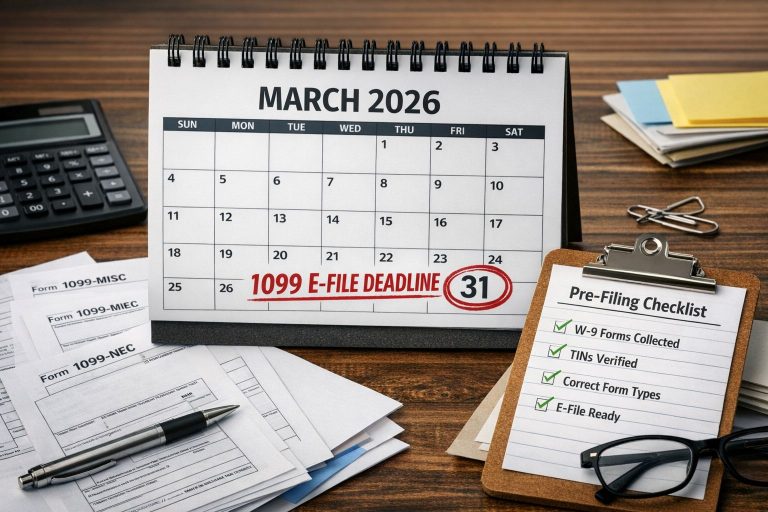
Second, for certain 1099-MISC and 1099-NEC reporting, the IRS says that starting with payments made after December 31, 2025, the minimum reporting threshold increases from $600 to $2,000. The IRS also says this threshold can be adjusted for inflation beginning after 2026. (IRS)
That matters. But it does not mean businesses can ignore W-9s.
This is weak thinking, and it will create the same January mess.
A higher threshold changes when a form may need to be filed. It does not solve the operational problem of missing vendor data.
Most businesses do not know in January which vendor will cross the reporting threshold by December. A freelancer who starts with one small project can become a recurring contractor. A legal vendor, consultant, healthcare provider, property owner, or service provider can cross the threshold quickly.
If the W-9 is missing after the vendor has already been paid, the business is now chasing tax information after the leverage is gone.
That is the real problem.
When the vendor wants to get paid, they respond faster. After payment, the request becomes easier to ignore.
A W-9 is not just a form. It is the data source behind cleaner 1099 reporting.
For vendor records, the key details usually include:
Without this information, your team may still face missing vendor records, incorrect names, wrong TINs, duplicate vendors, and last-minute cleanup.
The IRS instructions for 1099-NEC state that businesses generally file Form 1099-NEC for people paid at least $2,000 for services performed by someone who is not an employee. The instructions also note that a business must file Form 1099-NEC for any person from whom federal income tax was withheld under backup withholding rules, regardless of payment amount. (IRS)
That means the threshold is not the only thing that matters. Vendor classification, payment type, withholding status, and accurate tax details still matter.
OBBBA’s 1099-K change will get attention because platforms like payment processors and marketplaces are involved. But 1099-K is not the same as a W-9 workflow.
A 1099-K is typically connected to third-party payment networks. A W-9 is the information request businesses use to collect taxpayer details from U.S. vendors, contractors, and other payees.
So the real question for businesses is not only, “Did the 1099-K threshold change?”
The better question is:
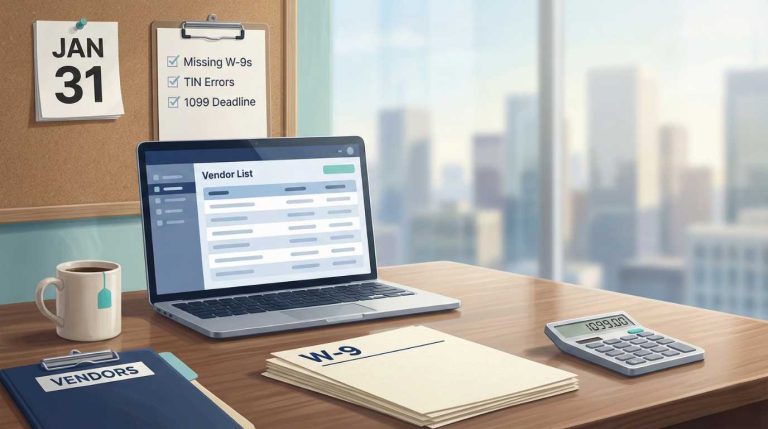
Can we clearly see which vendors are missing W-9s before year-end?
If the answer is no, the business still has a process problem.
The smart move is not to wait until January.
Use OBBBA as a reason to clean up vendor records before the year-end rush. A simple review should answer these questions:
Do we have a completed W-9 for every active U.S. vendor?
Are vendor legal names and business names separated correctly?
Are TINs stored securely and matched to the correct vendor?
Can we see which vendors are missing W-9s?
Can we track payment totals against reporting thresholds?
Can AP, finance, or the controller access the right records without digging through email threads?
If your answer is “not really,” the threshold change is not your biggest issue. Your vendor data process is.
GetW9 is relevant because OBBBA makes reporting rules something businesses need to understand, but GetW9 helps with the operational side: collecting, tracking, and organizing W-9 records before 1099 season becomes a cleanup project.
Instead of managing W-9s through spreadsheets, inbox searches, and manual reminders, teams can use GetW9 to centralize the process.
That matters because the pain is not only filing the 1099. The pain is everything before filing:
Missing forms.
Incomplete vendor details.
Unclear W-9 status.
Last-minute chasing.
Sensitive tax documents sitting in email.
No simple way to see what is ready and what is not.
OBBBA changed parts of the reporting conversation. It did not change the need for clean vendor data.
OBBBA may reduce reporting for some payments, especially where vendors stay below the updated thresholds. But businesses should not treat that as permission to delay W-9 collection.
The better approach is simple:
Collect W-9s early.
Track vendor status clearly.
Keep tax information organized.
Review vendor records before year-end.
That is how teams avoid January fire drills.
Better vendor data today. Fewer surprises later.
OBBBA changed parts of 1099 reporting, but missing W-9s can still slow your team down.
GetW9 helps businesses collect, track, and organize W-9s before tax season becomes a cleanup project.